Health and Safety Policy for Commercial Waste Potters Bar and Surrounding Service Areas
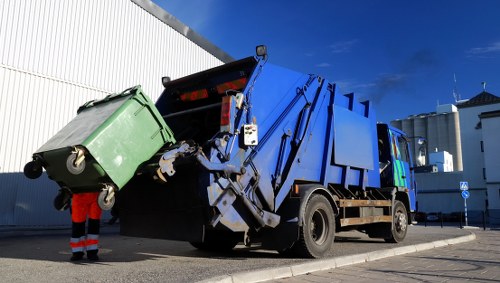 This Health and Safety Policy sets out the commitment of our commercial waste business to manage risk and protect staff, clients and the public across our rubbish company service area. The policy applies to all employees, contractors and representatives involved in the collection, handling, transport and disposal of commercial refuse in Potters Bar and adjacent operational zones. Our aim is to provide a safe working environment through clear responsibilities, practical controls and a culture that prioritises welfare and compliance.
We recognise that effective safety management for commercial waste services in Potters Bar depends on robust planning and consistent execution. Responsibilities are allocated at every level: senior management ensures strategic oversight and resource allocation, supervisors implement local controls and drivers and operatives follow safe systems of work. All personnel are required to report hazards, near misses and incidents immediately so that corrective action is taken without delay. This policy is a living document and will be regularly reviewed to reflect operational changes and emerging risks.
 Risk assessment forms the foundation of our approach to commercial refuse collection and waste removal across the rubbish company service area. We conduct dynamic, written risk assessments for every activity that may present a hazard — including vehicle movements, manual handling, bin lifts, bulky waste handling, hazardous materials and traffic management on site. Control measures follow the hierarchy: elimination, substitution, engineering controls, administrative controls and personal protective equipment (PPE). Employees are trained to understand risk ratings and implement mitigation measures consistently.
Operational controls for our business waste collection include vehicle safety, load security and containment, segregation of recyclables and hazardous streams, and clear procedures for spill and contamination response. Routine vehicle checks are mandatory and include brake, tyre, lighting, hydraulic and waste compaction system inspections. A pre-shift checklist is completed by drivers to confirm roadworthiness and safe equipment function. Where applicable, specialist handling procedures apply for clinical, chemical or asbestos-contaminated waste, and these are governed by separate controlled instructions to limit exposure and environmental harm.
Training and competence are emphasised across the organisation. Staff receive induction training, job-specific instruction and refresher sessions on manual handling, PPE use, vehicle operation, emergency procedures and safe waste segregation. 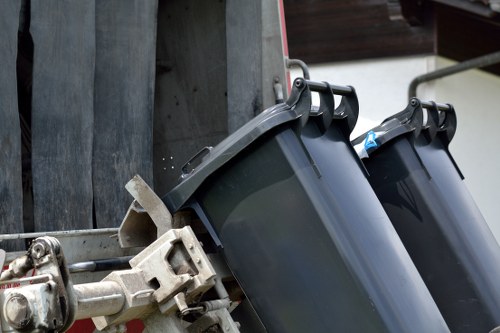 Supervisors conduct toolbox talks and on-the-job coaching to reinforce safe working behaviours. Records of training and competency assessments are maintained and reviewed to ensure personnel remain fit for task and aware of evolving best practices for commercial waste operations.
We maintain documented procedures for incident reporting, accident investigation and near-miss analysis. All incidents are investigated to identify root causes and preventive measures. The findings are cascaded through the business and where appropriate included in training. The policy promotes a just culture: workers are encouraged to speak up about safety concerns without fear of reprisal, enabling continuous improvement across the rubbish collection and commercial waste service area.
Waste segregation and environmental controls reduce exposure to hazards and support regulatory compliance for commercial waste Potters Bar operations. Our crews follow clear segregation rules: recyclables, general commercial refuse, food waste and controlled hazardous materials are separated at source where possible. On-site containment, labelled receptacles and secure transport procedures minimise cross-contamination and the risk of spills. We implement spill kits and containment measures on vehicles and depots to address accidental releases swiftly and safely.
 Health surveillance and welfare provisions are provided where roles involve prolonged exposure to hazardous substances, repetitive manual handling or high noise levels. Where necessary we arrange occupational health assessments, hearing checks and vaccination programmes in line with recognised occupational health standards. Welfare facilities at operational hubs include handwashing stations, first aid equipment and rest areas to support staff wellbeing during shifts. The policy emphasises that welfare is integral to safety — not a separate consideration.
 Monitoring, audit and continual improvement are central to how we manage safety across the rubbish company service area. Key performance indicators include incident rates, training completion, vehicle inspection compliance and corrective action closure. Internal audits and periodic third-party reviews verify the effectiveness of health and safety systems for commercial waste services. Senior management reviews performance and the policy annually or after significant operational changes to ensure ongoing relevance and effectiveness.
Roles, Responsibilities and Communication
Senior leadership retains ultimate responsibility for health and safety policy implementation, resource allocation and ensuring legal and best-practice standards are met across our commercial waste operations. Line managers and supervisors are responsible for implementing safe systems of work, carrying out routine inspections and ensuring staff understand and follow procedures. Employees are responsible for following safe working practices, using PPE correctly and reporting hazards immediately. Clear communication channels exist for escalating issues and sharing lessons learned.
Emergency preparedness includes clear steps for evacuation, fire response, incident containment and liaison with emergency services where necessary. Each vehicle and depot has an emergency plan and designated first aiders. Training on emergency response is provided to all relevant staff and refreshed regularly. We also maintain documentation that outlines procedures for major incidents affecting the health and safety of personnel and the wider community.
